

Advancing Transformative
Policy and Advocacy
As a state network, MEEA staff, educators, and youth leads support a variety of legislation that center our mission of environmental education, equity, and awareness on both state and federal levels.
Because youth and educators are the people most directly impacted by the legislation we work on, your voice is the most important when advocating for these bills. Together we are making a difference building a more just, sustainable, healthy and nature-connected future for all!
All of our advocacy work is done in network and through partnerships at the state and federal levels.
Thanks to Te Nature Based Education Consortium, The Enviromental Priorities Coalition, the Maine Green Budget Coalition, Maine Outdoor School for All Network, the North American Association for Environmental Education, Green Schoolyards America, and the Outdoor Alliance for Kids.
2026 Maine Legislative Updates
Passed! LD 1474 An Act to Strengthen the Teaching of Wabanaki Studies in Maine Schools
With your help, the Wabanaki Studies bill LD 1474 has been funded!
Your advocacy helped secure:
- the Wabanaki Studies Specialist position at the Maine Dept. of Education was made permanent!
- $100,000 was allotted by the Appropriations and Financial Affairs Committee for additional Wabanaki studies programming, which will ensure that compensation can go to the Wabanaki advisors for their contributions to this work.
Interested in getting started on your Wabanaki Studies journey? Check out the Wabanaki Studies in Action workshop Friday, May 8 at 9:35am at the MEEA Conference.
Already implementing Wabanaki Studies and want to grow your skills? Join us Thursday, May 7 from 1-4pm for the workshop Wabanaki Studies: Furthering Your Teaching and Learning to connect with Wabanaki advisors and other educators.
Thank you, especially to the Wabanaki Policy Youth Initiative team, the Wabanaki Alliance, the Nature Based Education Consortium’s Advocacy Working Group, and Wabanaki Studies Education for your heart and your energy. We are so grateful to all of the educators, tribal leaders, state leaders, and community members who used your voices over these past few months (and years!) to help ensure Wabanaki Studies is available and accessible to all students in our communities.
This bill seeks to accomplish two crucial goals:
Wabanaki Studies Specialist
1) securing a permanent position within the Maine Department of Education for a Wabanaki Studies Specialist to continuously support all Maine schools, regardless of the ongoing political climate, and;
Wabanaki Advisors
2) ensuring that the Department holds funds for the necessary contracted work of any Wabanaki advisors so that they are properly compensated for the important cultural knowledge that they share in order for quality, accessible resources to be built.
This bill received an outpouring of support from the Maine education community, leading to more than 150 letters written in favor of the bill sent to the Committee on Education and Cultural Affairs.
Passed! All of the Environmental Priorities Coalition 2026 priority bills passed the legislature!
MEEA is a member of the Environmental Priorities Coalition. As a member, MEEA supports all of the EPC bills, and is prioritizing the Land for Maine’s Future program, recognizing Wabanaki self-determination, and making climate polluters pay their fair share.or climate devastation. Click the links to see fact sheets about each issue.
Self-Determination in Action for Wabanaki Youth
WPYI uplifts the next generation of youth leaders in what is now called Maine to take action for Wabanaki studies education and Wabanaki sovereignty.
Over the course of the 2026 legislative session, Maine Environmental Education Association and the Wabanaki Alliance will support a team of Wabanaki and non-Native youth ages 16-24 to learn about the lawmaking process and how to become an advocate in their state legislature.
Project Coordinators
Sage Phillips, Communicartions & Community Engagement Coordinator at the Wabanaki Alliance

Kaya Lolar, Director of Policy & Wabanaki Studies at MEEA

What bills will WPYI youth be learning about?
LD 1474, An Act to Strengthen the Teaching of Wabanaki Studies in Maine Schools. Click here to read about this bill.
LD 395, a federal beneficial acts bill, involves a nuanced issue that, with proper legislative support, could be a significant step towards regaining financial sovereignty for the Wabanaki, as “all four of the tribes in Maine [are currently] stark economic under performers relative to the other tribes in the Lower 48 states.” (Source below)
LD 785, which aims to engage a task force based on recommendations from previously passed legislation that protects Wabanaki sovereignty. Bills like this ensure that the Wabanaki are not only allowed the capacity but are welcomed to the table where environmental solutions are built – a notion that holistically benefits all, including the land we all live on today.
2026 Federal Policy Priorities
Revitalizing America’s Schoolyards Act
Creates a Revitalizing America’s Schoolyards Grant Program;
Defines a Revitalized Schoolyard as a park-like outdoor environment at an elementary or secondary school that has been updated to strengthen local ecological systems, provide a range of hands-on learning resources, and foster nature play and social opportunities while enhancing the health and well-being of children and adults. These schoolyards may include trees and plants where children can access them; cultivated gardens; outdoor meeting and gathering areas; and other elements designed by, and for, the students and the surrounding community;
Allows funds to be used to plan and implement a revitalized schoolyard(s);
Prioritizes funding for communities with high rates of students receiving free and reduced meals program; and
Requires a catalog of best practices for these spaces to be developed.
Appropriations
MEEA works hard every year to advocate to the Maine congressional delegation to support budget appropriations that advance environmental education at the EPA office of Environmental Education (EE) and NOAA.
Specifically, we are working to advocate that in budget year 2027, the EPA office of EE has a $9.5 million budget approval. We are also advocating for continued funding for the NOAA B-Wet grant programs and the NOAA Environmental Literacy grant programs. These federal grant programs move funding from the federal government into states to support environmental education.
One of MEEA’s important roles in Maine is to work with our federal delegation to ensure they are aware of important budget considerations and that they will support appropriations requests for environmental education. This critical work helps bring grant opportunities to community based organizations in our state that advance environmental and outdoor education in Maine and across the U.S.
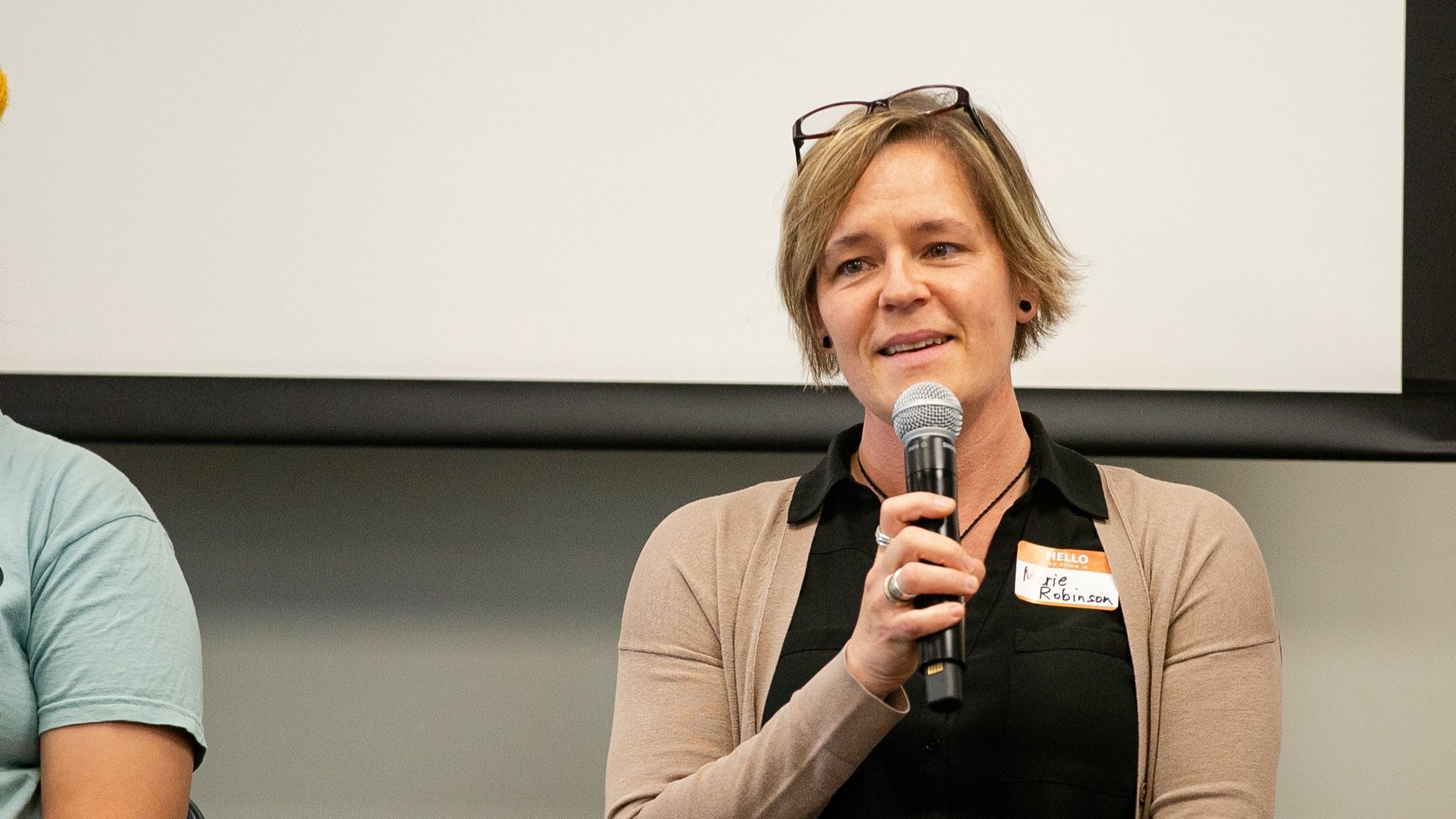
Educators are powerful advocates
Check out these advocacy guides for educators to help you with submitting testimony and using your voice to pass impactful policy that benefits environmental education.
We’re starting a Maine Green Schools Network!
LD 1543: An Act to Establish the Maine Green Schools Network passed both the House and the Senate enactment votes in the 132nd Legislature! We are waiting for Governor Mills to sign the bill into law. If passed, this policy will support implementation of Maine’s new climate literacy plan, a recent addendum to the Maine Environmental Literacy Plan. Learn more below.
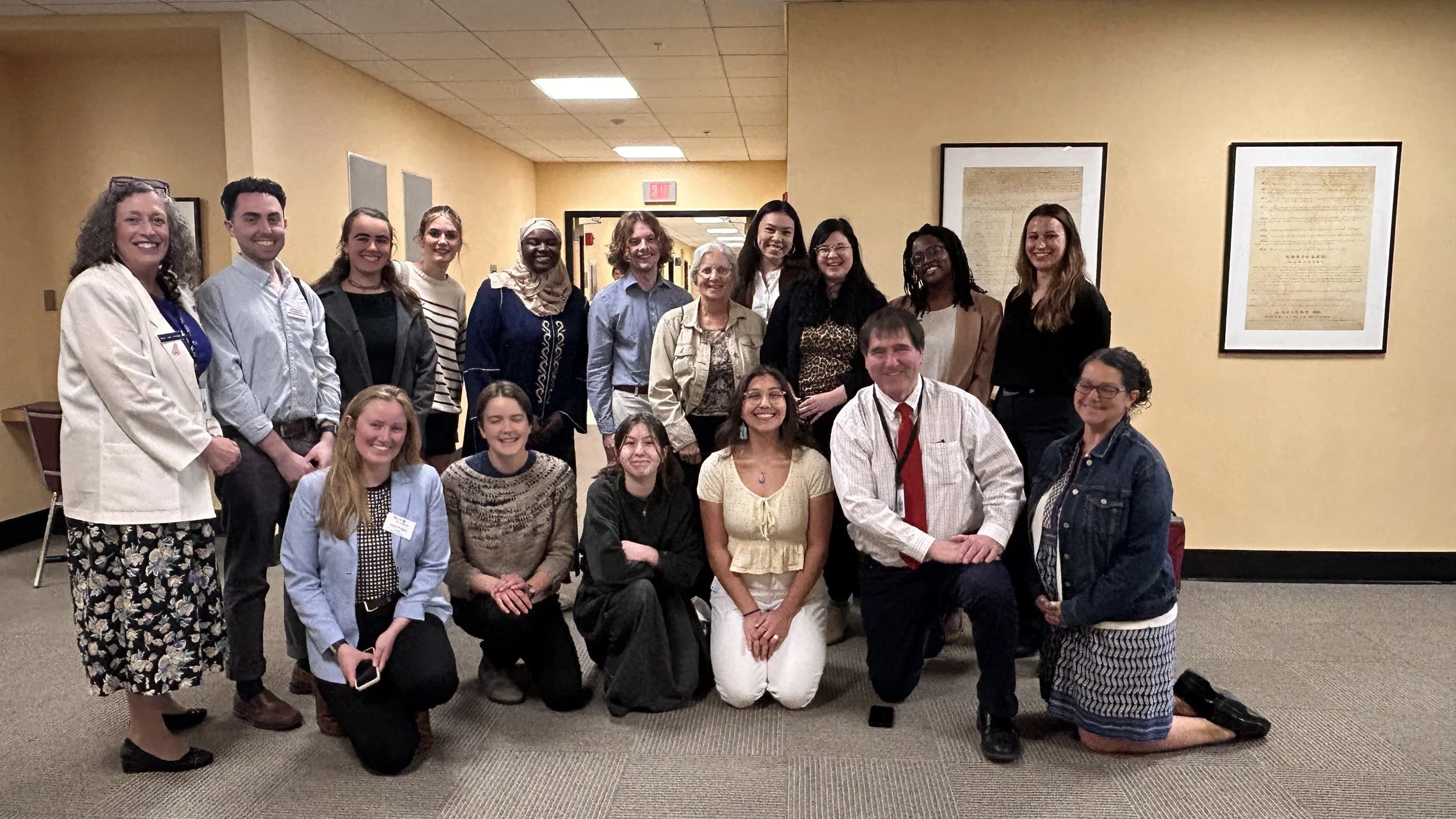
Youth Lead the way to a
Maine Green Schools Network!

For the first time, MEEA piloted an entirely youth-led policy campaign made possible in partnership with the Nature-Based Education Consortium. Two former MEEA Changemakers fellows, Kaya Lolar and Will Lehan, led a team of seven Maine high school juniors and seniors . Together, the youth leads gave powerful testimony, strengthened their lobbying skills, and supported equity in their local communities through further education and resources regarding advocacy through state policy. . The success of this youth-led model made it clear how impactful it is to center youth in education-based policy work and we’re excited to organize similar youth campaigns in the future!