
Reimagining Nature Programming for Lewiston Youth
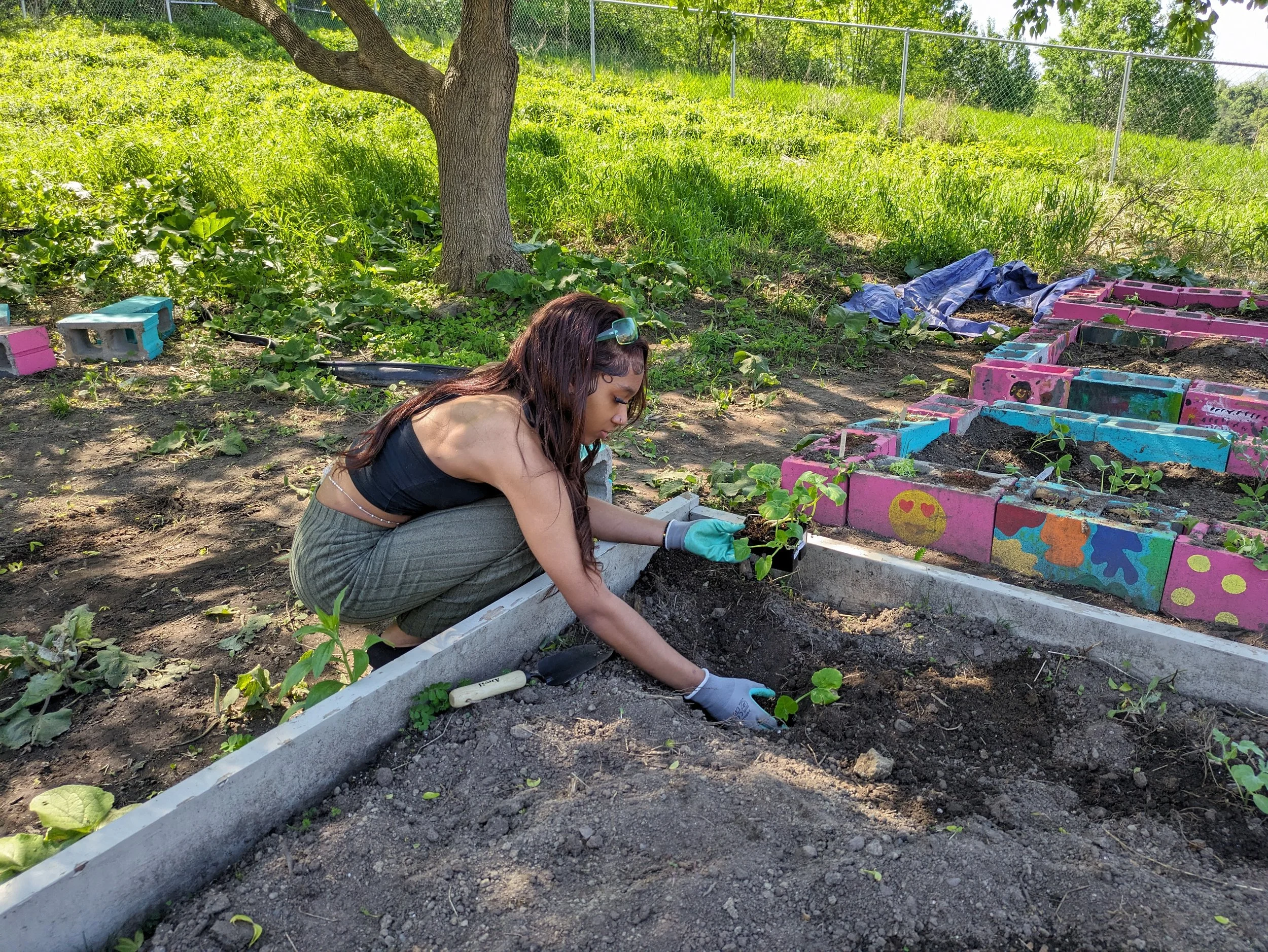
Aliza Padilla planting squash and canteloupe in the raised beds at Next Step High School in Lewiston Public Schools. Photo credit: Julia McGabe, MEEA Mini Grant Recipient
Research by
Sulwan Ahmed, The Nature Conservancy of Maine and MEEA Changemakers Resident
Spencer Traylor of Samara Strategies,
Maia Seigerman ‘26 at Bates College
When you hear the word “nature”, what do you think of?
Maybe you think of a forest or the ocean. Maybe you think of your family’s farm or the soccer field in your city park. That answer is different for everyone, depending on where you grew up, where you live now, how much money your family has, if you have a car or not, and so many other factors.
Changemakers Resident Sulwan Ahmed set out to ask what reimagining nature-based programming could be for Lewiston youth. She spent the last year researching this question with youth at Tree Street Youth with support from The Nature Conservancy in Maine, Maia Seigerman ‘26 at Bates College, and Spencer Traylor at Samara Strategies.
The project explores how immigrant, refugee, and low-income youth in Lewiston experience wellbeing & belonging in nature with the goal of helping conservation organizations like The Nature Conservancy rethink how nature programming works in urban, diverse communities in Maine.
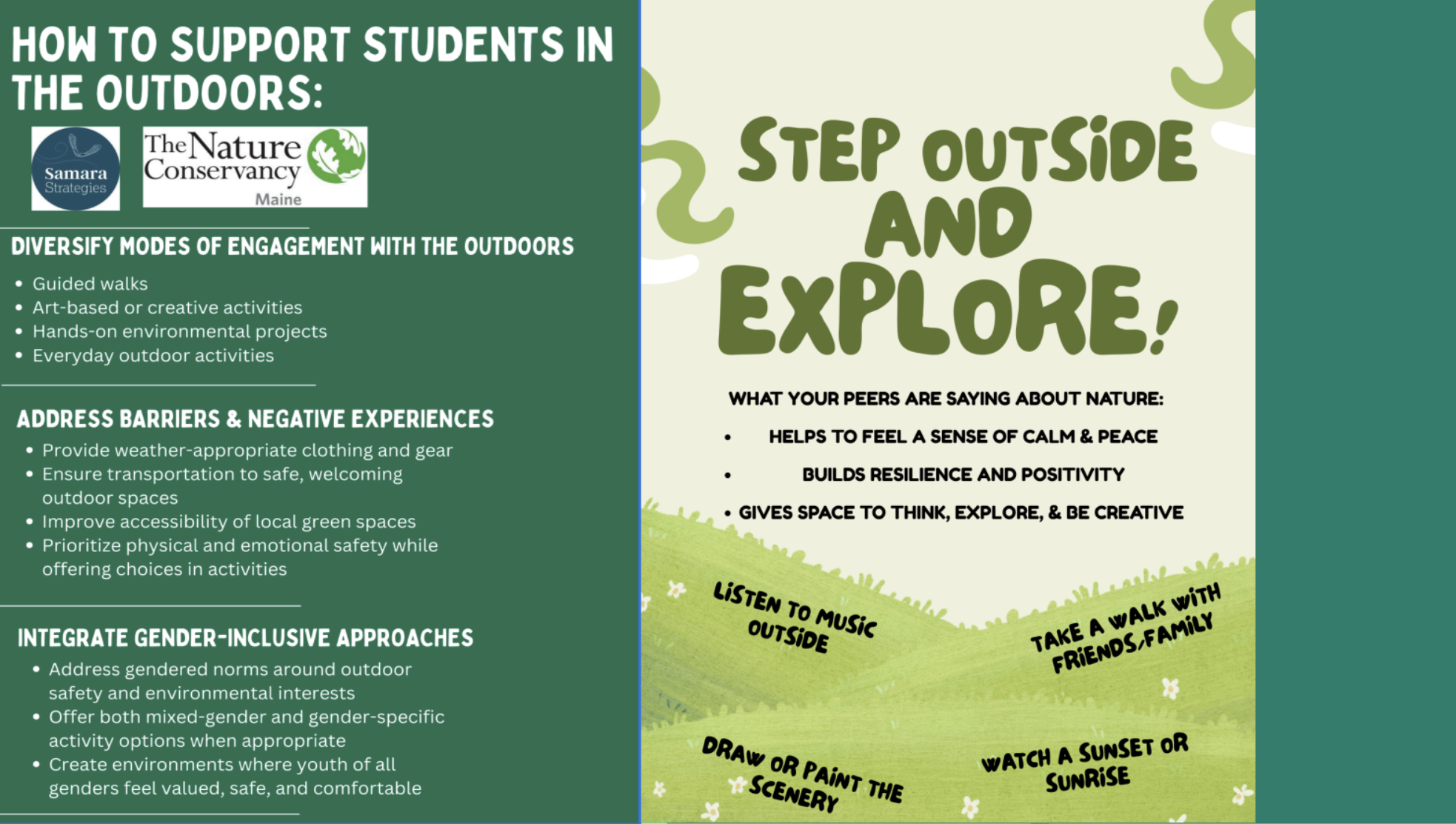
Credit: Sulwan Ahmed, The Nature Conservancy Conservation Forum Presentation
For the youth at Tree Street, nature is cultural and intergenerational.
Some of the immigrant and refugee youth interviewed feel most connected to nature when they are farming or cooking because it helps them feel connected to their African roots and their home countries. Nature is also social and familial infrastructure in many of the countries youth come from. Outdoor spaces are designed around gathering in community — like malls, public gathering spaces for lingering not just passing through, and integrating nature into daily urban life. Sulwan encouraged attendees at TNC’s March Conservation Forum to reimagine the importance of conserving land in cities for these purposes, like planting trees in neighborhoods and preserving park spaces.
Here’s what some of the youth at Tree Street think of when they hear the word “nature”:
Farms & gardens
Walking routes and accessible transportation
Soccer fields & basketball courts.
“A place where I can breathe the air without the feeling of smoke in my throat”
Hanging out with friends and family
“When you’re outside you feel better than being cooped up.”
“I feel happy because I get to play”
New Models for Urban Nature-based Programming
Youth and urban communities’ connection to nature is foundational for long term conservation. If conservation does not reflect how people live, it risks becoming irrelevant. Old ways of thinking, such as one-time outdoor trips away from home, do not encourage a daily life nature connection. Here are just a few of the ideas for models for nature-based youth programming informed by Sulwan’s research:
Incorporating more sports into nature-programming
Farming and food systems / food sovereignty
Walking and social time
Quiet and reflective spaces
Culturally grounded outdoor experiences
Reflection Questions
Are you curious how your community thinks about access to nature? Here are some of the questions Sulwan, Spencer (Samara Strategies), and Maia (Bates 26’) asked the youth they interviewed.
You can try answering these for yourself to understand your own relationship to nature in your community.
How would you describe your relationship with nature?
What safety concerns do you think kids might have when outdoors?
What kinds of natural spaces do you feel most connected to?
How do you feel when you spend time in nature?
Does spending time outdoors affect your connection to Maine?
Do you see yourself continuing to spend time outdoors?
Do you think the outdoors is more calming, stressful, or both? Why?
Was there a moment when your relationship with nature changed significantly?
What does a thriving relationship with nature look like for you?
You can learn more about Tree Street Youth here, and MEEA and TNC’s Changemakers Residency program here.
Sulwan wraps up her 2-year residency this June 2026. We are so excited to see where Sulwan’s career goes next and are incredibly grateful for her efforts in building more nature-based opportunities for diverse communities throughout Maine.
Stay tuned for more information on the hiring process for the next round of Changemakers Residents!